What Makes Off-Duty Clothes Look Expensive? Answered
Quick Answer: Off-duty clothes read expensive when four things line up: fabric that holds its shape, a hem that ends at a deliberate point on the body, a limited color range within one temperature family, and one structured piece among the soft ones. Price correlates with the first of these and almost nothing else. A well-fitted mid-range set with a stiff bag reads more expensive than a designer hoodie worn with leggings that have gone slack at the knee.
Most people trying to elevate casual dressing start by spending more. It works occasionally and fails often, because the actual drivers are structural. Here is what they are, in the order they matter.
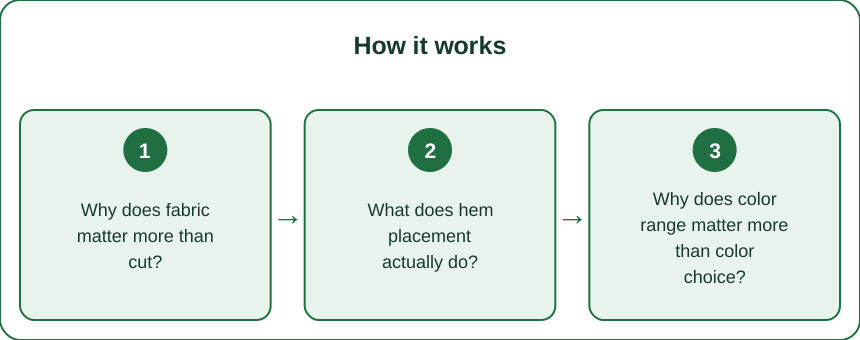
Why does fabric matter more than cut?
Because casual clothing has very little construction holding it up.
A blazer looks structured because of interfacing, shoulder padding, and seams engineered to hold a shape independent of the wearer. A sweatshirt has none of that — its entire appearance comes from how the fabric itself behaves. Which means fabric is not one factor among several in off-duty dressing. It is most of the outcome.
The specific quality that reads as expensive is recovery: the fabric’s ability to return to shape after being stretched. A knit with good recovery still looks fitted at hour eight. One without it bags at the knees, seat, and elbows within an hour, and bagging is what the eye reads as cheap.
How can you check recovery before buying?
Stretch a section between both hands, hold for five seconds, release. If a visible distortion remains, the garment will bag in wear. This takes three seconds in a fitting room and eliminates most of the bad purchases.
Does fiber content predict it?
Partly. Elastane between 5 and 12 percent usually indicates decent recovery in a knit. Under 3 percent in a stretch garment tends to mean it relies on the knit structure alone, which loosens faster. But construction matters too, so the hand test beats the label.
What does hem placement actually do?
It decides where the eye reads your proportions, which is why two identical outfits in different lengths look nothing alike.
Every hem creates a horizontal line. A horizontal line at the widest part of a body segment reads heavier; the same line at the narrowest part reads leaner and more deliberate. For most people, that means a top hem that ends at the high hip or below the widest hip point — but not exactly on it.
The expensive-looking version is almost always the one where the hem placement looks chosen rather than inherited from the size chart.
Where should a sweatshirt hem land?
Either at the high hip, roughly where your hand rests naturally, or fully covering the seat. The zone in between — mid-seat — is the one that reads unresolved on almost everyone.
What about leggings and trousers?
Ankle bone or fully to the shoe. A hem that stops at the mid-calf or just above the ankle bone on a full-length garment reads as a fit accident rather than a cropped style, unless the cut is clearly designed as a crop.
Is tucking always more polished?
No, but a front tuck usually is. A full tuck can look severe with soft fabric. A front-only tuck defines the waist while letting the fabric stay soft, which is the compromise that reads expensive in casual contexts.
Why does color range matter more than color choice?
Because coherence is cheaper to achieve than good taste, and it reads the same.
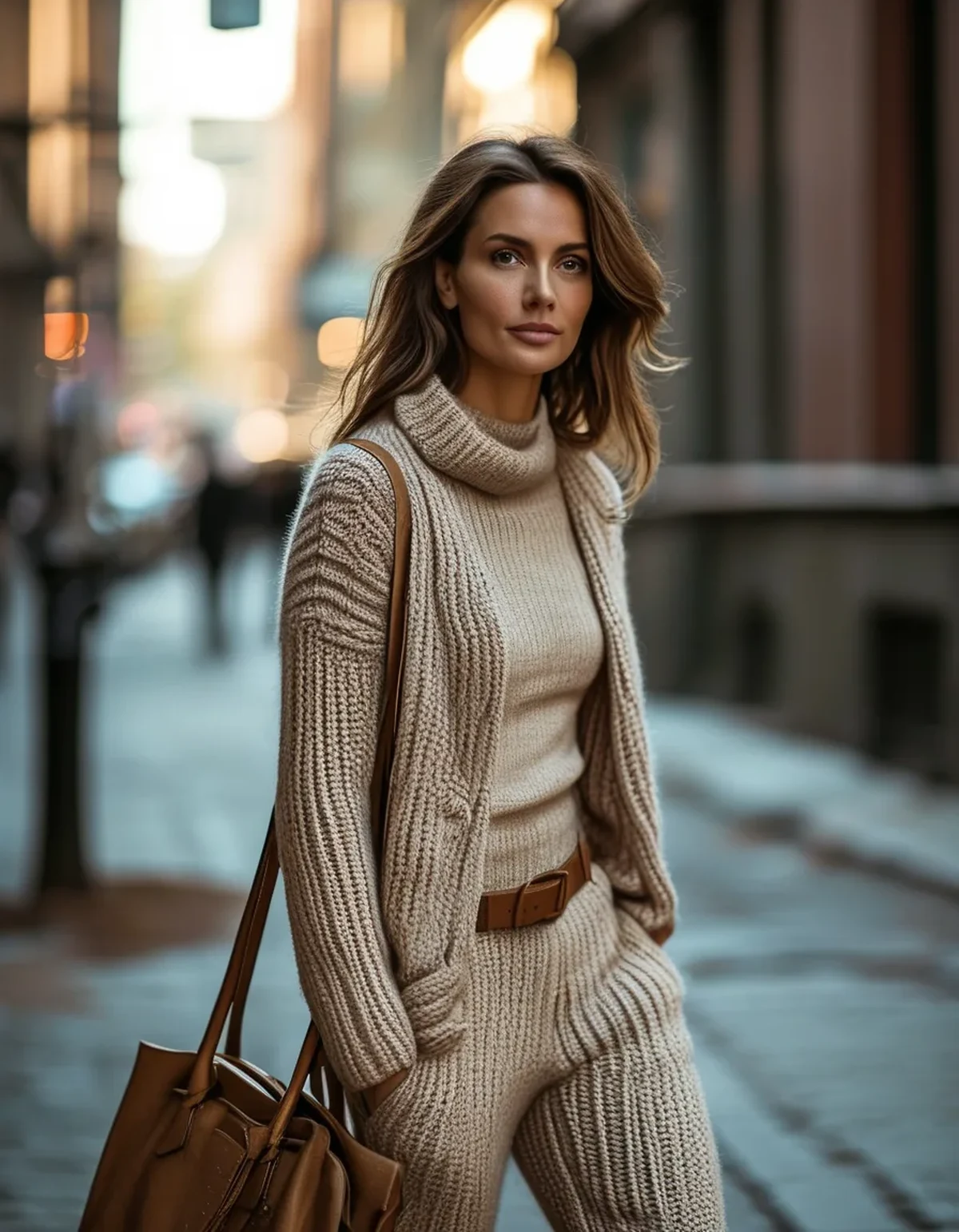
An outfit built from three shades within one temperature family — all warm, or all cool — looks considered regardless of the individual pieces. An outfit mixing warm cream with cool grey looks like separate purchases, which is exactly what it usually is.
This is why matching sets read as expensive so reliably. They guarantee coherence by construction. You can produce the same effect without buying a set by limiting yourself to two or three colors that share an undertone.
How many colors is too many?
Three in the main outfit is the working ceiling, not counting shoes and a single accent. Four starts to look busy in soft fabrics, which have no structure to organize the eye.
Do neutrals always work together?
No, and this is the most common failure. Cream, greige, and stone are warm. Pure white, silver-grey, and charcoal are cool. Mixing across that line is the specific reason a supposedly all-neutral outfit can still look off.
What is the safest high-impact combination?
A single deep color paired with one light neutral of the same temperature, plus a texture change between them. It is unglamorous advice and it works on almost everyone.
What does one structured piece do?
It gives the eye a reference point for everything else.
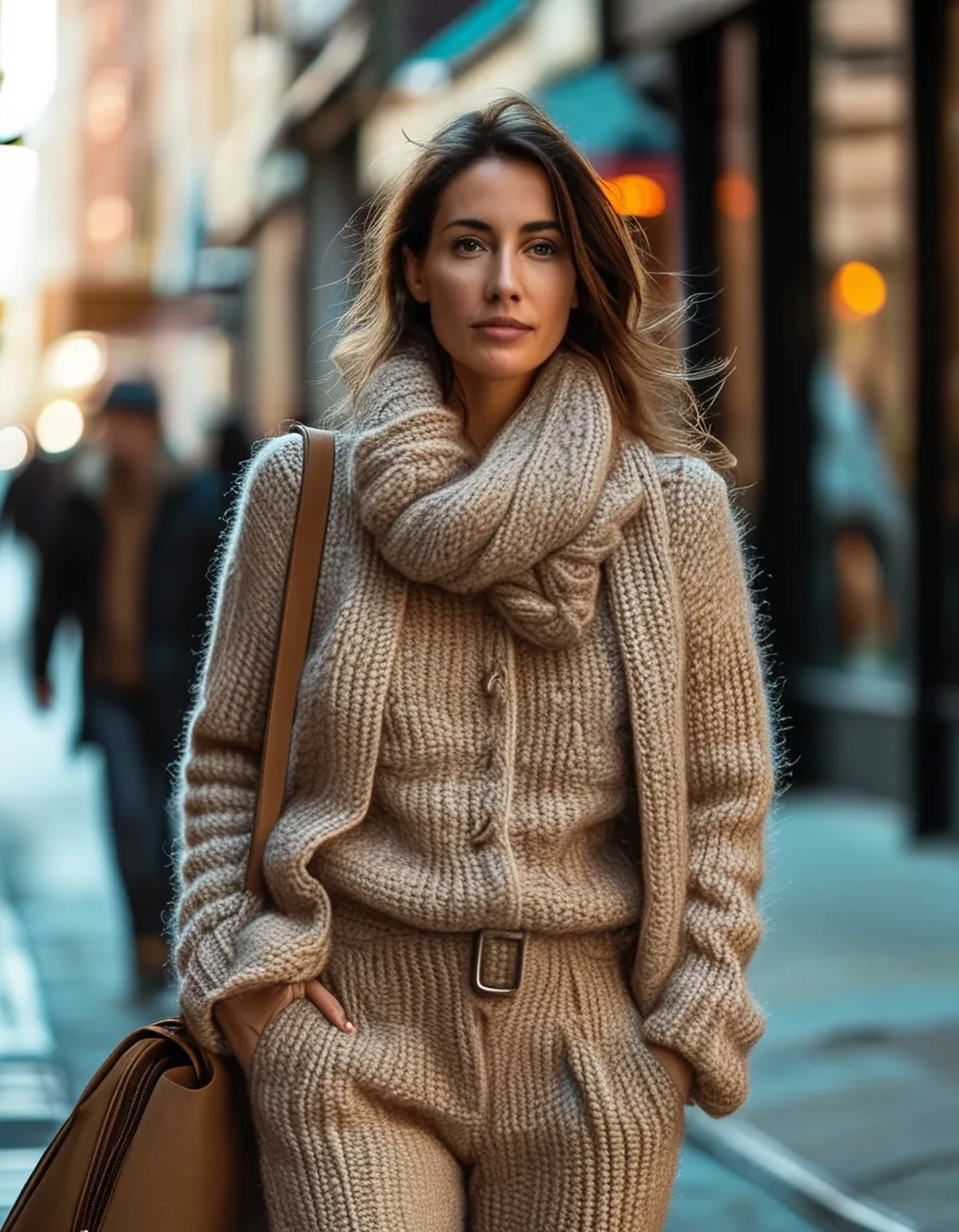
An outfit made entirely of soft things — knit top, knit bottom, soft shoe, slouchy bag — has no line for the eye to measure against, so everything reads as slouchy by default. Introduce a single item with defined edges and the soft pieces suddenly read as deliberately soft rather than shapeless.
The structured piece can be almost anything: a bag that holds its shape, a leather or crisp cotton jacket, a shoe with a defined sole, sunglasses with a strong frame. One is enough. Two is fine. Three starts undoing the ease that made the outfit off-duty in the first place.
Which structured piece gives the most return?
A bag, comfortably. It sits at mid-body where it is highly visible, it does not affect comfort, and it is the item that changes the read of a soft outfit most reliably.
Does jewelry count?
It helps but does less. Small metal pieces are too visually light to organize a full outfit, though a single substantial piece — a wide cuff, a heavy chain — approaches the same effect.
What about a structured shoe with athleisure?
It works when the shoe is clean and simple. A visibly technical running shoe pulls the outfit toward gym rather than off-duty, which is a different look, not a worse one — but it does not read as elevated.
Myth vs Fact: Looking Expensive
Myth: Expensive-looking means expensive. Fact: Recovery, hem placement, color coherence, and structure are the drivers. Only the first reliably costs money, and mid-range knits often outperform premium ones because premium casualwear frequently prioritizes hand-feel over recovery.
Myth: Black always looks more expensive. Fact: Black hides construction detail and shows lint, fading, and pilling more than any other color. A well-chosen mid-tone in good fabric usually reads more expensive than tired black.
Myth: Oversized reads as luxury. Fact: Oversized reads as luxury only when one dimension is fitted. Oversized top with fitted bottom works. Oversized on oversized reads as clothes that do not fit.
Myth: Logos signal quality. Fact: In off-duty dressing, visible branding is close to neutral at best and reads cheap when the garment itself is not holding shape. The logo cannot compensate for a bagged knee.
Myth: You need to iron casual clothes. Fact: You need to store them correctly. Most casual wrinkle problems come from being folded under other items or dried too long, both of which set creases that no amount of steaming fully removes.
FAQ: Off-Duty Polish, Answered
What is the fastest single upgrade to a casual outfit?
Replace whichever piece has lost its shape. One slack garment degrades the entire outfit, and the eye finds it immediately even when you cannot name what looks wrong.
How do I keep knits from bagging in the first place?
Wash cold, skip the dryer or use low heat, and rotate rather than wearing the same set twice in a row. Elastane recovers with rest; consecutive wears are the main cause of permanent bagging.
Does the same advice hold as the weather cools?
Mostly, with one addition — layering multiplies the color coherence problem. Three layers in three temperature families is the most common autumn failure. Keep the outer layer and the base in the same family and let the middle be the accent.
TL;DR:
- Fabric recovery is the single biggest driver, and you can test it in three seconds by hand.
- Hem placement should look chosen — high hip or past the seat, not the middle.
- Keep to two or three colors within one temperature family.
- Add exactly one structured piece; a bag gives the most return.
Pick your least favorite casual outfit and check it against these four. In almost every case, exactly one of them is the reason it never gets worn.
See It in Motion
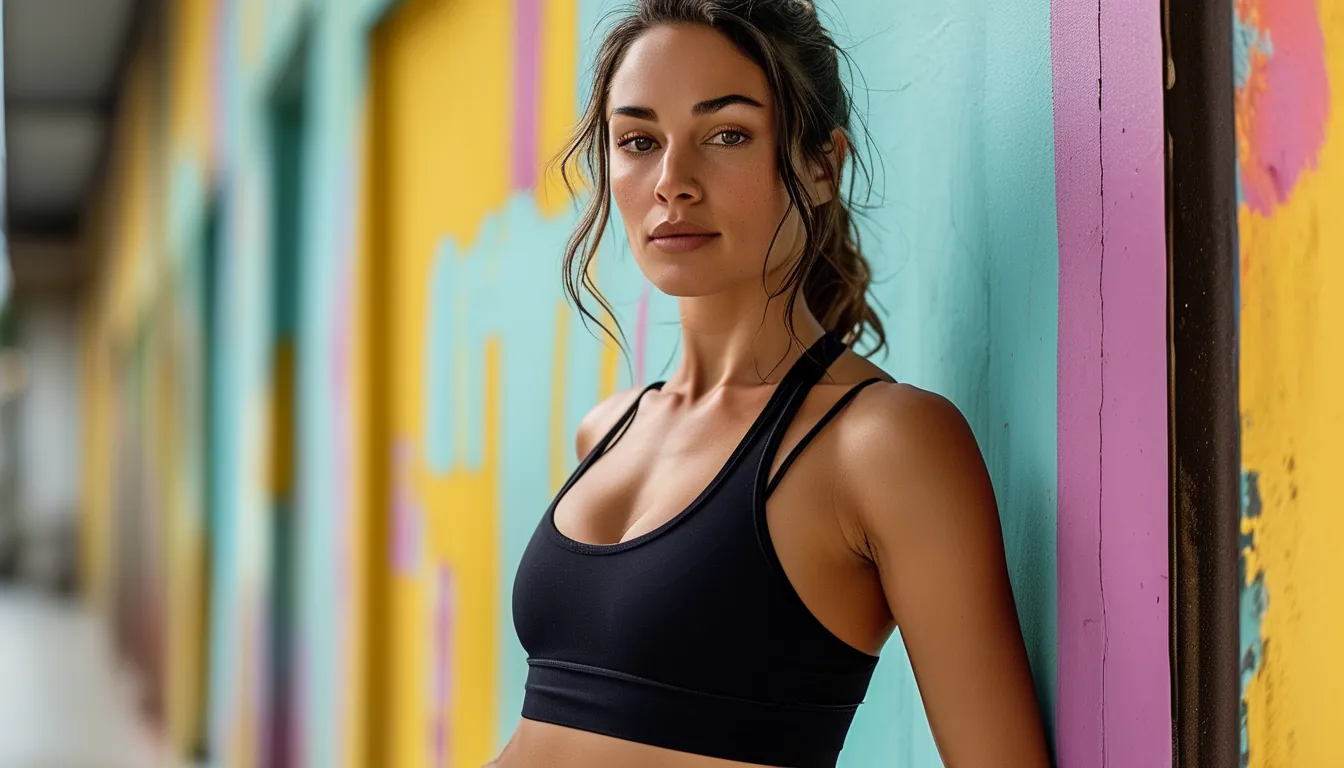
Seen here: High Waist Yoga Leggings with Side Pockets — shop it on bubblelime.com
Keep Reading
This article is for general informational and styling purposes only. Fit, sizing, and product availability may vary.