Off-Duty Outfit Questions: Dressing for a 15-Degree Swing
Quick Answer: Build around a fixed core that works at the warm end, then add two removable layers rather than one heavy one. Two thin layers cover a wider range than one thick layer of the same total warmth, and they give you three usable configurations instead of two. The pieces that come off need to be carryable — that is the constraint most people ignore, and it is why the outfit fails at 2pm rather than at 8am.
The forecast says 9 degrees this morning and 22 this afternoon, and both of those are true.
You dress for the first number and spend the afternoon carrying a coat. Or you dress for the second and spend the morning cold. Neither is a styling failure exactly — it is a planning one, and it has a fairly mechanical solution.
Here are the questions people actually ask about this, answered in the order they come up.
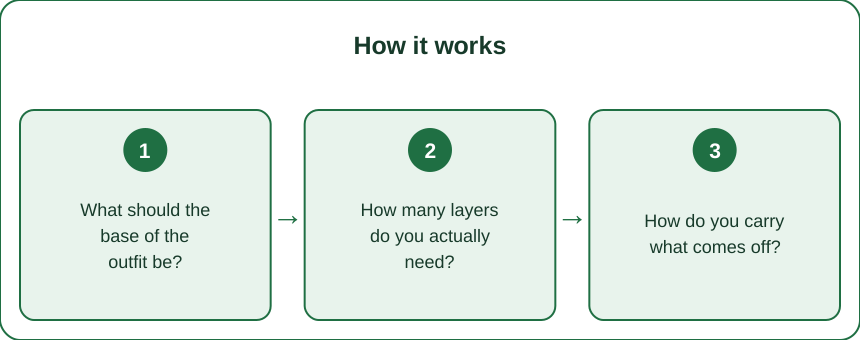
What should the base of the outfit be?
The base should work at the warmest temperature of the day, not the average.
This is the single decision that determines whether the outfit succeeds. If your core layer is comfortable at 22 degrees, you can add warmth for the morning. If it is comfortable at 15, you cannot remove warmth in the afternoon — you are simply stuck.
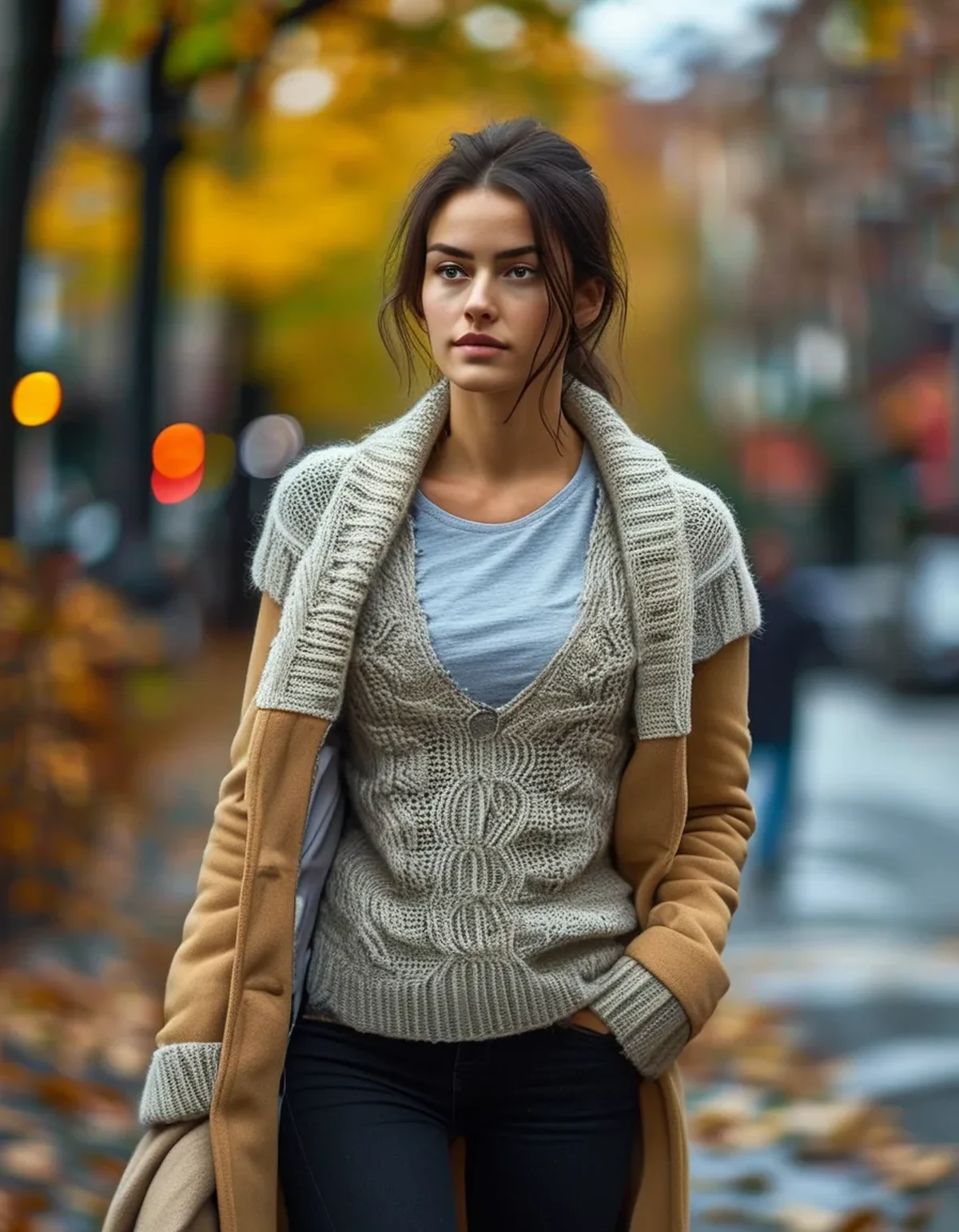
For a 9-to-22 day, that means the base is what you would wear on a mild afternoon: a fitted tee or a lightweight long sleeve, plus your bottom of choice.
What about the bottom half?
Bottoms are where the swing gets ignored, because you cannot remove them. Choose the mid-weight option rather than either extreme. Full-length leggings in a standard weight, straight-leg trousers in a mid-weight fabric, or jeans — all of these span the range acceptably. What fails is anything fleece-lined, which is unwearable by afternoon, and anything very light, which is genuinely cold on a 9-degree morning.
Does the fabric matter more than the weight?
For the base layer, yes. Merino and merino blends handle a swing better than cotton because they manage moisture as conditions change. A cotton tee that gets slightly damp on a brisk walk stays damp and then feels cold when you stop. That is the mechanism behind feeling chilled in the afternoon on a warm day, which surprises people.
How many layers do you actually need?
Two removable layers, not one. This is the part that does the real work.
Two thin layers totalling the same warmth as one thick layer cover a wider range, because they give you four states instead of two:
- Both on — the 9-degree morning
- Outer off, mid on — mid-morning, roughly 14 to 17 degrees
- Both off — the 22-degree afternoon
- Outer on, mid off — a windy or drizzly moment at any temperature
That fourth configuration is why the outer layer should be wind-resistant rather than warm. Wind resistance is worth more degrees than insulation in this range, and a light shell does its job over a tee just as well as over a knit.
What should the middle layer be?
Something that looks intentional worn alone, since it will be your visible top for several hours. A fine-gauge knit, a cardigan, an overshirt, or a light quarter-zip. Avoid anything that only makes sense under a coat, because it will spend most of the day being the outermost thing you are wearing.
And the outer?
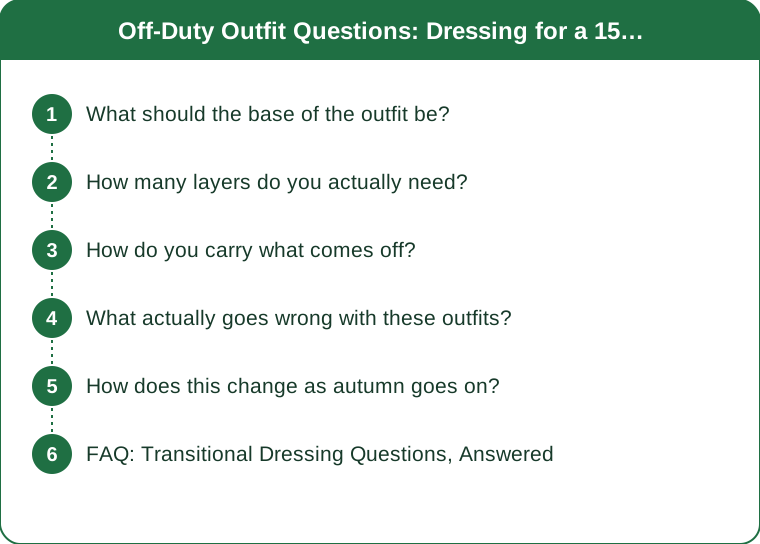
Light, packable, and not precious. This is the layer that gets carried, sat on, and stuffed into a bag. A light anorak, a trench in a technical fabric, or an unstructured jacket. If it cannot be folded into a bag, it will end up over your arm all afternoon, which is the visual that makes an outfit read as unplanned.
How do you carry what comes off?
This is the question that actually decides whether the plan works, and it is the one nobody asks until 2pm.
Match the bag to the layers, not to the outfit. A small crossbody looks better and holds nothing. If two layers are coming off, you need somewhere for them to go.
The workable options:
- A tote or a soft shoulder bag with real volume. A packable shell folds to about the size of a paperback; a fine knit folds smaller than people expect.
- A cardigan or knit tied at the waist, which works if the knit is fine and the outfit is casual, and looks untidy if the knit is bulky.
- A jacket with its own pocket that it packs into, which is genuinely the neatest solution and worth choosing for on that basis alone.
What if I am going straight from day to evening?
Then the middle layer matters most, because it is what you will be wearing when the temperature drops again at 6pm. Choose the mid layer for how it looks in the evening, not for how it performs in the morning. A knit in a good colour that works over a tee at dinner is doing more total work than a technical fleece that only makes sense outdoors.
Do I need different shoes?
Rarely, in this range. A closed shoe works at both ends of a 9-to-22 day. Where it matters is underfoot conditions rather than air temperature — if the morning is wet and the grass stays damp until noon, that decides the shoe more than the forecast does.
What actually goes wrong with these outfits?
Five recurring failures, in rough order of frequency.
The single heavy layer. One warm coat over a light top produces two states: too hot and too cold, with nothing in between. It is the most common approach and the least effective one.
The base layer that is too warm. Choosing a mid-weight top as the base seems sensible in the morning and makes the afternoon unfixable.
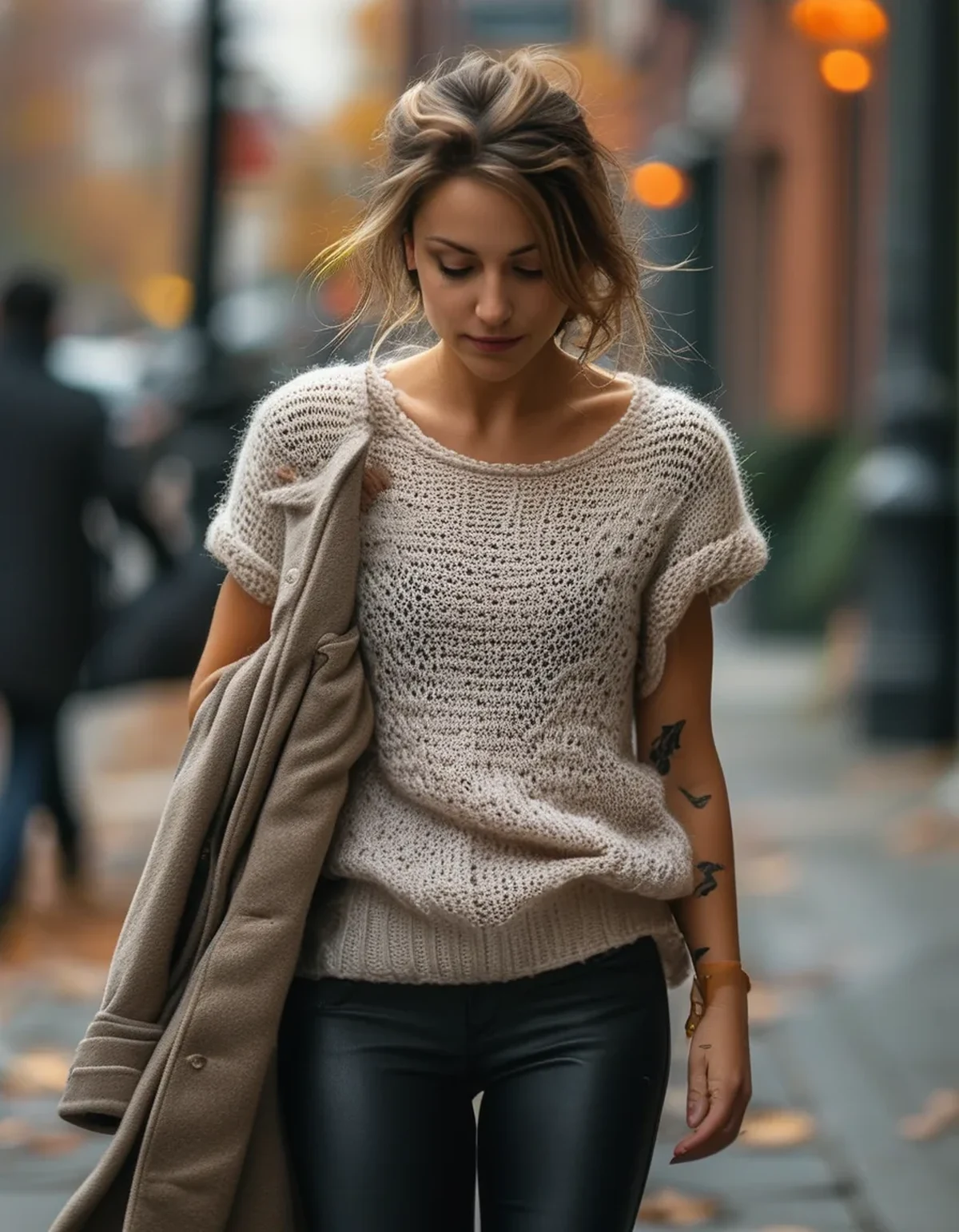
The unplanned carry. A beautiful coat, no bag, and four hours of holding it.
Bottoms chosen for the morning. Fleece-lined leggings at 9 degrees are a delight and at 22 degrees are unwearable, and there is no adjustment available.
Forgetting that indoors is a third climate. Offices, cafés, and shops in early autumn are frequently heated before the weather genuinely requires it. A day with a 15-degree outdoor swing often has a 20-degree total swing once indoor spaces are included, which is a stronger argument for two thin layers than any outdoor consideration.
Is there a simple formula?
There is, and it fits in a sentence: base for the afternoon, mid layer that stands alone, outer layer that packs into your bag. If all three of those are true, the outfit works at both ends of the day and you are never carrying anything visible.
How does this change as autumn goes on?
The swing narrows and the whole range drops, which changes what each layer does rather than how many you need.
Late September: a 12 to 15 degree swing is common. This is peak two-layer territory and the system above works exactly as described.
Mid October: the swing typically narrows to 8 or 10 degrees, and the whole range shifts down. The base layer becomes a long sleeve, the mid layer gets slightly heavier, and the outer layer starts needing to be genuinely warm rather than just wind-resistant.
November: the swing narrows further and layering gets simpler again, because the afternoon is no longer warm enough to need anything removed. This is when a single good coat starts making sense again — the reason it fails in September is specifically the size of the swing, not the layering principle.
Should I buy anything specifically for this?
If one piece: a packable wind-resistant shell. It is the highest-value item for transitional weather because it delivers several degrees of comfort for almost no bulk, and it solves the carrying problem by design.
If two: add a fine-gauge knit in a colour that goes with most of your wardrobe. It is the mid layer that will be visible most of the day, most days, for two months.
FAQ: Transitional Dressing Questions, Answered
Is a scarf worth it in this range?
More than people expect. A light scarf is the fastest adjustable layer you have — it comes off in seconds, packs into nothing, and covers a surprising amount of the temperature range because of how much heat is lost from the neck. It is arguably better value than a third garment layer.
What about sleeveless as a base?
It works for the afternoon and creates a problem in the morning, because a bare shoulder under a knit is cold in a way a covered one is not, and you notice it immediately when the mid layer comes off. A short sleeve is the more flexible base.
How do I stop looking like I got dressed for a different day?
Keep the colours of all three layers within the same family. Layers read as intentional when they look like one outfit at every stage of removal, and accidental when the mid layer clearly was not chosen alongside the base. This is why a neutral base plus a neutral mid plus one colour works so reliably.
TL;DR: Build for the afternoon, then add back.
- Base layer = what works at the warmest point of the day. Everything else is additive.
- Two thin removable layers beat one thick one — four usable configurations instead of two.
- The outer layer should be wind-resistant and packable; the mid layer should look intentional worn alone.
- Choose bottoms in the middle of the range, since they cannot be adjusted.
- Match your bag to the layers coming off, or you will carry them.
Indoor heating adds another five degrees to the swing in early autumn, which is the real argument for thin layers over one warm coat.
See It in Motion
Seen here: High Waist Yoga Leggings with Side Pockets — shop it on bubblelime.com
Keep Reading
This article is for general informational and styling purposes only. Fit, sizing, and product availability may vary.