How to Stretch Your Summer Off-Duty Wardrobe Into September
Quick Answer: Your summer casual wardrobe carries into September with three adjustments, none of which require buying anything: close the ankle gap by trading sandals for closed shoes, add one removable mid layer over every outfit you already wear, and shift the palette one step warmer — cream instead of bright white, one saturated color instead of three. The pieces stay; the framing changes. Actual fall shopping can wait until the weather commits.
The last two weeks of August are when outfits start feeling slightly wrong for reasons that are hard to name. The reasons are nameable, and they are cheaper to fix than a shopping trip.

Why do summer outfits stop working before the weather actually turns?
Because three things shift before the afternoon temperature does.
The daily swing widens. A late-August day in most of the US opens in the low 60s and peaks in the mid 80s. A pure summer outfit is dressed for 2pm and wrong for 8am and 8pm — which are exactly the hours most off-duty life happens.
The light angle drops. Summer’s overhead light flatters sheer, pale, breezy fabrics. The lower gold-toned light of late August makes those same fabrics read slightly tired — sheer linen shows its wrinkles more, and stark white starts to glare against warming tones everywhere else.
The context changes around you. School schedules restart, work rhythms return, and the visual backdrop of everyone else shifts a step more put-together. The same outfit that read as relaxed in July reads as unfinished in September, purely by contrast.
None of this means summer clothes are done. It means they need one layer of translation. A tank top is no longer an outfit; it is the base of one. That single reframe — every summer piece is now a base layer or an accent — is most of what transitional dressing actually is.
Which summer pieces convert, and which should quietly retire?
Sort by one question: does it work under or over something?
Converts easily: fitted tanks and tees (base layers now), matching sets (split them — the top under an overshirt, the bottom with a knit), midi skirts and dresses (add sleeves over, closed shoes under), full-length yoga pants and leggings (they were never seasonal), light button-downs (promote them from beach cover to actual shirt), white sneakers.
Converts with effort: shorts — they stay for warm afternoons but want a closed shoe and a longer sleeve up top to balance the exposure. Slip dresses — layer a tee underneath or a fine knit over, or they read like July.
Retires now: strappy flat sandals (the single loudest summer signal on the body), sheer gauze pieces with nothing under them, straw bags and visors, and anything that only works sweat-damp and sun-bleached — the neon accents, the swim-adjacent terry.
Retire is not a moral judgment; it is a storage decision. The pieces that made the outfit in July will unmake it by mid-September, and putting them away is faster than wondering nightly why the mirror looks slightly off.
A useful sorting test for the borderline pieces: hold each one against your favorite mid layer and your closed shoes. If it works with both, it converts; if it needs bare ankles and full sun to make sense, it retires. Ten seconds per garment settles the entire maybe pile — and the maybe pile is where transitional closets go to stall.
The keep pile should be bigger than the retire pile. If it is not, you are retiring by mood rather than by function.

What are the three no-buy moves that update everything at once?
Move one: close the ankle gap. Bare ankles above flat sandals are summer’s signature, and it is the first place an outfit dates itself. Swap to sneakers, loafers, or any closed shoe, and let hems land at or near the shoe. Same outfit, different season, zero dollars.
Move two: add one removable mid layer. An overshirt, an open cardigan, a light zip layer — over the tank, over the dress, over the matching set. The formula for cool evenings is already in your closet: buttery-soft leggings plus an oversized knit covers every temperature from 58 to 75 degrees, and the layer comes off when noon arrives. Open-front beats pullover, because a layer you can shed while walking is a layer you will actually use.
Move three: shift the palette one notch. Keep the silhouettes, warm the colors. Bright white steps to cream or ecru. Three brights become one bright against neutrals. Pastels pair with something deeper instead of each other. This is the cheapest of the three moves and the one people notice most, because color reads before cut.
Run all three on an outfit you wore last week and it will carry to October. Run none, and even new purchases will read like summer with a receipt.
What Nobody Tells You About Transitional Dressing
Everyone else is also improvising. The put-together people you see in September are running two or three formulas on repeat, not a new wardrobe. Pick your own two and stop auditing daily.
Sweat has not left. Late-summer afternoons still hit the mid 80s, so the base layer under that new mid layer needs to breathe. Keep summer’s breathable fabrics doing the touching-skin job and let the layer do the looking-seasonal job.
The September sun is still strong. Lower light angle, nearly the same UV. Sunglasses and a cap stay in rotation even after the sundresses leave — squinting is not a fall aesthetic.
The two-closet overlap is the messy part. For about three weeks you are living from both seasons at once. A basket or one dedicated shelf for the in-play summer pieces keeps the transition from becoming a floor pile.
Swim gear needs a real goodbye. Rinsed, fully dried, stored flat — not shoved in a drawer damp in a beach bag. The elastic you save is next June’s budget.
FAQ: Late-Summer Style, Answered
When should I actually switch my closet over?
When morning temperatures hold below 55 for a week, not on a calendar date. Until then, run the overlap system — full switchovers in August get reversed by a 90-degree week.
Is white after Labor Day really over?
The rule is dead; the physics are not. Crisp summer whites read off against fall textures, but cream, ivory, and winter-weight white are year-round. Change the texture, keep the lightness.
Can I still wear shorts in September?
Yes — balance them. Closed shoes and a long sleeve up top let shorts read as a choice rather than a leftover. The all-bare July version is what expires.
If I buy just one thing for the transition, what earns it?
An overshirt in a mid neutral — it layers over more of a summer wardrobe than any knit, works open or closed, and keeps earning through spring. But try the no-buy moves for two weeks first; most people discover they already own the season.
TL;DR:
- Summer clothes become base layers and accents — the reframe is the whole strategy.
- Close the ankle gap, add one open-front mid layer, and warm the palette a notch: three free moves.
- Retire strappy sandals, sheer gauze, and straw; keep tanks, sets, leggings, and midis in play.
- Real fall shopping waits until mornings hold below 55.
Tonight, pull one outfit you wore this week and run the three moves on it. If it works — and it will — you just bought yourself three weeks of September for nothing.
See It in Motion
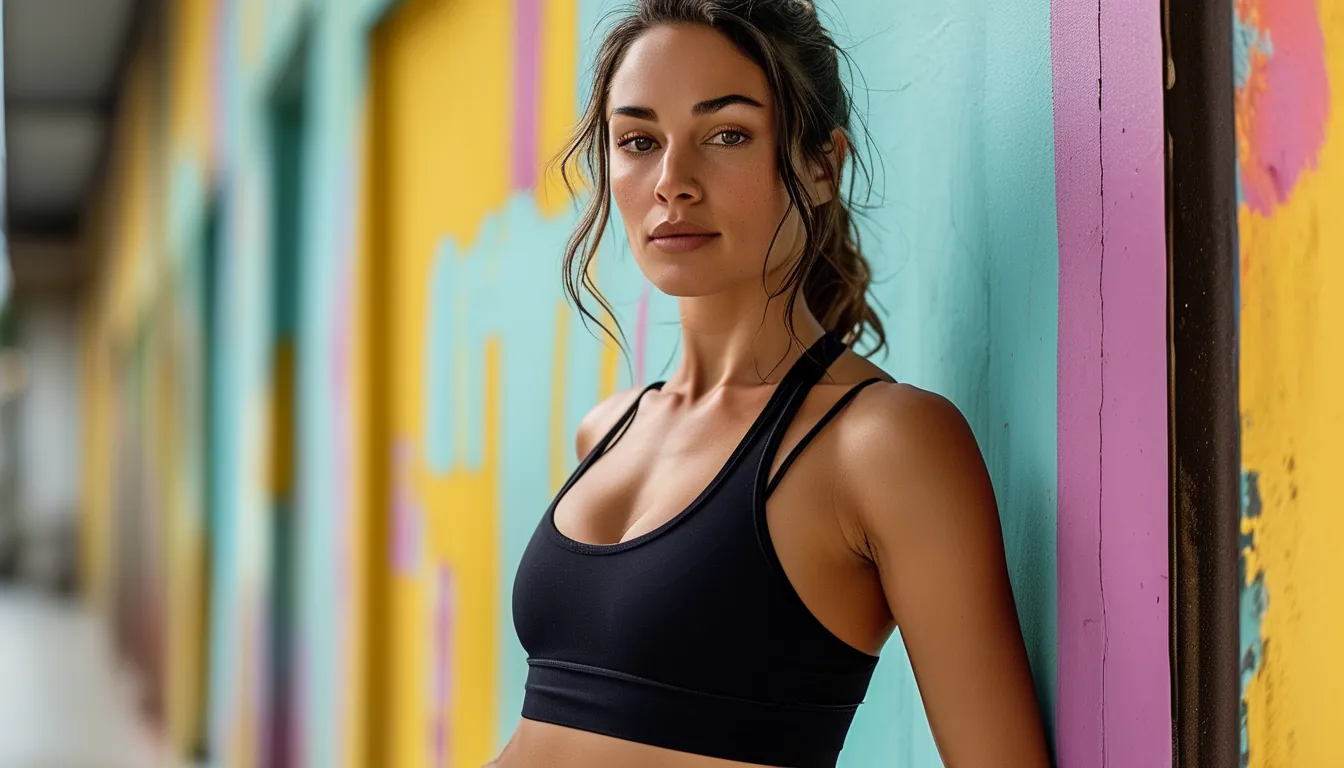
Seen here: High Waist Embossed Yoga Leggings with Side Pockets — shop it on bubblelime.com
Keep Reading
This article is for general informational and styling purposes only. Fit, sizing, and product availability may vary.