Your Off-Duty Outfit Questions for the Late-Summer-to-Fall Gap, Answered
Quick Answer: In the transitional weeks, build around a mid-weight bottom you can wear all day and treat the top half as removable layers. The bottom sets the season; the layers handle the 24-degree swing. A cropped or open third piece in a heavier fabric reads as fall even when the temperature does not.
Nobody dresses well in this stretch of the calendar by accident. You leave the house cold, you are overheated by 11am, and by evening you want the jacket back.
The mistake almost everyone makes is dressing for the average temperature. The average is not a temperature you will ever actually experience that day.
Here are the questions that come up most, answered directly.

What is the one thing to get right first?
The bottom half. Decide it first and let everything else adapt around it.
Your bottoms are the piece you cannot remove, adjust, or open during the day. They have to be tolerable at both ends of the swing, which in practice means a mid-weight fabric — not a thin summer knit, not fleece-lined.
Concretely, that is a 7/8 legging in a medium-weight compressive fabric, a straight-leg or wide-leg pant in a woven with some body, or a mid-weight knit jogger. All of them work at 58 degrees and survive 82.
The top half is where you solve the temperature problem, because every piece up there can come off, open, or push up.
Does color matter for reading as fall?
More than fabric does, honestly. The exact same outfit in bone and pale blue reads late summer; in olive, chocolate, rust, or charcoal it reads autumn. If you only change one thing, change the color of the top layer. Fabric weight is what your body notices; color is what everyone else notices.
How do you layer without looking bulky?
The bulk problem comes from stacking layers of similar weight. Three medium things look like a pile. One thin thing plus one substantial thing looks intentional.
The formula that works:
- Base: fitted, thin, tucked or hitting at the hip — a tank, a fitted long sleeve, a bodysuit.
- Third piece: substantial and open — an unbuttoned overshirt, a knit cardigan, a soft blazer, a light quilted vest.
- Nothing in between unless it is genuinely cold.
The open third piece is doing the real work. It adds visible structure and a vertical line, it can come off in one motion, and it reads as deliberate rather than as “I got cold.”
Why do my layers always look like I got dressed twice?
Usually because the lengths are too similar. If your base and your outer layer end within two inches of each other, the eye reads a hem collision. Aim for a clear difference — a short base under a long cardigan, or a long base under a cropped jacket. Either contrast works; the near-miss is what looks accidental.
Which shoes actually work in the transition?
This is where most transitional outfits fall apart, because summer shoes look wrong with fall colors and boots look desperate in 80-degree heat.
The safest category is a low, clean sneaker in leather or a substantial canvas — it carries into fall without announcing a season. A loafer or a flat mule does the same job with more polish.
What to avoid, and why:
- Anything with an open toe plus a knit layer. The mismatch is the single most common transitional error.
- Tall boots before the temperature genuinely justifies them. They read as costume, and they are uncomfortable at midday.
- Bright summer running shoes with an autumn palette. If the shoe is the loudest thing in the outfit and the rest is muted, the shoe wins and it looks unplanned.
Do socks matter here?
Yes, and they are an easy upgrade. A visible sock in a color pulled from your top layer ties the outfit together vertically and makes a sneaker look chosen rather than defaulted to. No-show socks with a knit layer is the same mismatch as an open toe.

What Nobody Tells You About the Transitional Wardrobe
Your summer clothes do not become fall clothes by adding a jacket. A linen dress with a leather jacket over it is still a linen dress. Transitional dressing means changing the base, not covering it.
Sweat is a bigger problem in the transition than in summer. You dress for the morning, you get warm at noon, and the layer you sweated in at 11am is the one you put back on at 6pm. This is why breathable base layers matter more now than in July.
The 24-degree daily swing is real and it is the whole design brief. In many US cities, late August through September routinely swings more than 20 degrees between dawn and mid-afternoon — a wider range than either mid-summer or mid-winter.
Bags do transitional work too. Swapping a straw or canvas tote for leather or a structured nylon shifts an outfit into autumn without changing a single garment.
Nobody else is tracking your consistency. You can wear a summer top with an autumn bottom on the same day. The rule is that the outfit has a coherent temperature and palette, not that every piece was bought in the same season.
How do you keep it from reading as sloppy?
The line between off-duty and undressed is mostly about structure and fit, not formality.
One structured element, always. A collar, a defined shoulder, a proper waistband, a firm shoe. One is enough. With zero, the whole outfit goes soft and reads as loungewear.
Fit at the shoulder and the ankle. Those two points do most of the visual work. Everything can be relaxed in between and still look intentional.
Matching sets punch above their weight because the color continuity reads as a choice rather than as separates that happened to be clean.
Watch for pilled, faded, or stretched pieces. In relaxed clothing, condition is what separates “off-duty” from “worn out.” One visibly tired garment sinks the outfit no matter how good the styling is.
What is the fastest fix when an outfit is not working?
Change the shoe. It is the single highest-leverage swap and takes ten seconds. If that does not fix it, add or remove the third piece. If neither works, the problem is the bottom half, and you are better off starting over than adjusting.
FAQ: Quick Answers on Transitional Off-Duty Style
Can I wear leggings into fall as everyday wear?
Yes, and the transition actually favors them — a mid-weight legging with an open third piece and a real shoe is one of the most reliable formulas in this stretch. What changes going into true fall is the top half getting longer and heavier, not the leggings going away.
How many transitional pieces do I actually need?
Fewer than it feels like. Two mid-weight bottoms, three thin bases, and two open third pieces in autumn colors will cover six weeks. The transition is short; it does not deserve a whole wardrobe.
Is it too early for sweaters?
Not if the sweater is doing a real job. A fine-gauge knit at 60 degrees in the morning is practical. A chunky cable knit at 78 degrees is a costume choice, and you will carry it around all afternoon. Let the actual forecast decide, not the calendar.
TL;DR:
- Pick the bottom half first — it is the piece you cannot adjust all day, so it must survive both ends of the swing.
- Solve temperature with the top half: thin fitted base plus one substantial open third piece, nothing in between.
- Change the color before you change the fabric. Olive, rust, and chocolate read fall faster than weight does.
- Low leather sneakers, loafers, or flat mules bridge the seasons; open toes and tall boots do not.
- Keep one structured element in every outfit or it slides into loungewear.
The transition is only about six weeks long, which is exactly why it is worth having two or three outfits you trust on repeat rather than solving it from scratch every morning.
See It in Motion
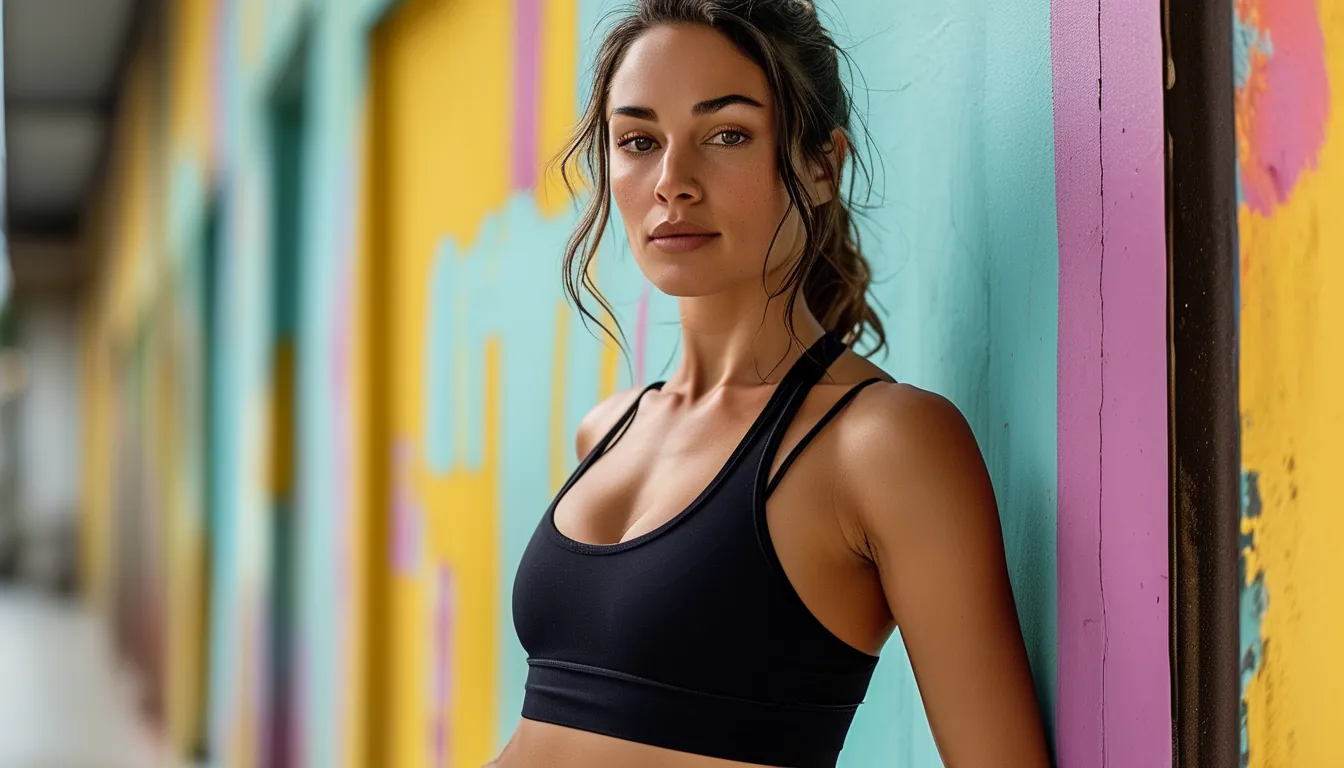
Seen here: High Waist Yoga Leggings with Side Pockets — shop it on bubblelime.com
Keep Reading
This article is for general informational and styling purposes only. Fit, sizing, and product availability may vary.