How to Make Summer Off-Duty Pieces Work With Early Fall Boots
Quick Answer: The friction is almost never the boots - it is the gap between hem and boot, the weight mismatch between a summer fabric and a heavy shoe, and a color palette still calibrated for bright light. Fix those three and most of your summer wardrobe carries into October. The fastest single change is a mid-weight third piece, which rebalances a light outfit against a heavy shoe without needing anything new.
Below, the questions people actually ask during this specific three-week window.

Why do my summer pieces suddenly look wrong with boots?
Because a boot is visually heavy and your outfit above it is not, so the eye reads a bottom-heavy imbalance.
Weight mismatch is the core issue. A chunky ankle boot has substantial visual mass. A gauzy top and a lightweight legging above it give the eye nothing to balance against, so the boot dominates and the whole look reads as unfinished rather than transitional.
The hem gap does the rest. Summer pieces are often cropped or ankle-length, which was correct with trainers and sandals. With a boot shaft, a two-inch stretch of bare ankle between hem and boot cuts the leg line at the worst possible point and reads as an accident.
And the palette is still summer-calibrated. Bright whites, pale pastels, and high-contrast brights were designed for strong overhead light. In flat September light they look thin, particularly next to a saturated leather boot.
Fabric behaviour changes too. Linen and gauze that hung well in dry summer air go limp in damp autumn air. The same top on the same body genuinely drapes differently in October, which is not imagination.
The good news: all four are addressable with pieces you already own, and mostly with one addition.
What is the fastest fix that costs nothing?
A mid-weight third piece, put on over what you already chose.
A denim jacket, a knit cardigan, an oversized shirt, or a light blazer all do the same structural job: they add visual weight to the top half, which rebalances the boot. This is why the transitional uniform of a summer dress plus a jacket plus boots works so reliably - the jacket is not just for warmth.
Choose the third piece for weight, not warmth. A very thin kimono adds color but no mass and does not solve the problem. A structured shirt or a chunky cardigan does. If you are unsure, hold both up and see which one your eye reads as heavier.
Length matters more than you would expect. A third piece hitting at mid-hip or lower creates a longer top block, which shortens the visible gap between outfit and boot. A cropped jacket over a cropped top with a boot creates two gaps and reads choppy.
And color-anchor to the boot. If the boot is brown, having something brown, tan, camel, or rust higher in the outfit ties it in. A single repeated color tone turns the boot from an intruder into part of the plan - this is the trick that most reliably makes a summer outfit read deliberate rather than caught out.
Everything else is optimisation. If you do one thing this month, it is this.

What do I do about the ankle gap?
Three approaches, depending on the pieces.
Close it with a sock. A ribbed sock in a color that relates to the outfit, deliberately visible above the boot, turns a gap into a styling choice. The sock must look chosen - a scrunched sports sock reads as an accident, a ribbed cream or charcoal one reads as intentional. This is the cheapest fix available.
Close it with length. Full-length leggings or trousers that meet or tuck into the boot remove the gap entirely. If your summer bottoms are cropped, this is the argument for one full-length pair rather than replacing the wardrobe.
Or open it deliberately, with a taller boot. A knee-high or mid-calf boot with a cropped hem creates a clean, obviously intentional break rather than a marginal one. The rule is that a gap should be either clearly closed or clearly large - the two-inch accidental version is the only one that looks wrong.
What does not work: trying to pull cropped leggings down to meet the boot. They ride back up within a hundred steps and you spend the day adjusting.
On proportion specifically: if you are petite, closing the gap almost always reads better than opening it, because a visible break shortens the leg line. If you are tall, an open break is a good tool for the same reason in reverse.
Which summer fabrics survive into autumn and which do not?
A short honest sorting.
Carry over well: cotton jersey, ponte, ribbed knits, mid-weight modal, denim, and anything with a bit of structure. These hold shape in damp air and have enough visual weight to sit beside a boot.
Carry over conditionally: lightweight linen and viscose - fine under a jacket, poor on their own. They read as summer fabrics because they are, but a mid-weight layer over the top makes them read as a base layer rather than the outfit.
Do not carry over: gauze, broderie, anything sheer, and very fine pale knits. These fight the seasonal light and the boot simultaneously, and no amount of styling makes them look intentional in October.
Special case - matching sets. These transition better than almost anything, because the top and bottom already share weight and color. A summer set plus a boot plus an oversized shirt is close to a formula. It is also why sets feel disproportionately useful in this window.
On color: the summer pieces that transition best are the mid-tones - olive, rust, camel, charcoal, navy, and warm neutrals. Bright white and pale pastel need a darker anchor somewhere in the outfit to avoid looking washed out under grey skies.
And on shoes specifically: a sleek ankle boot in a color close to your hem does far more transitional work than a heavy lug-sole one, which requires a genuinely autumn-weight outfit above it to balance.
What should I actually buy, if anything?
Three items, in order of how much they unlock.
1. One full-length legging or trouser in a mid-weight fabric. This solves the gap problem across your entire existing wardrobe. Higher return than any single top, because it works with everything you already own.
2. One mid-weight third piece in a neutral that relates to your boots. An oversized shirt, a denim jacket, or a substantial cardigan. If your boots are brown, this piece should not be stark black - a warm neutral bridges better.
3. Ribbed socks in two colors. Genuinely. They close the gap on everything cropped you own for the price of a coffee.
What not to buy yet: a coat, heavy knitwear, anything explicitly winter. You are three weeks from knowing what the season actually feels like, and early-autumn purchases made in a warm spell get worn twice.
And a decision rule for the window: if an outfit only works because the day is unusually warm, it is a summer outfit. If it works with the third piece removed and added, it is a transitional outfit. That test sorts a wardrobe faster than any seasonal rule.
The transitional weeks reward one or two well-chosen bridge pieces and punish a full seasonal replacement - which is convenient, because the full replacement is also the expensive option.
TL;DR:
- The problem is weight mismatch, hem gap, and a summer-calibrated palette - not the boots.
- A mid-weight third piece is the single fastest fix, because it rebalances a light outfit against a heavy shoe.
- Repeat the boot’s color somewhere higher in the outfit to make it read as planned.
- Gaps should be clearly closed (socks or full-length hems) or clearly large (taller boots) - the two-inch accidental version is the only wrong one.
- Carry over jersey, ribbed knits, denim, and matching sets; leave gauze and sheer fabrics behind.
- Worth buying: one full-length bottom, one neutral third piece, ribbed socks. Not yet: coats and heavy knits.
Three weeks of awkwardness is normal and fixable with pieces you own. The boot was never the problem - it was just the first thing to arrive.
See It in Motion
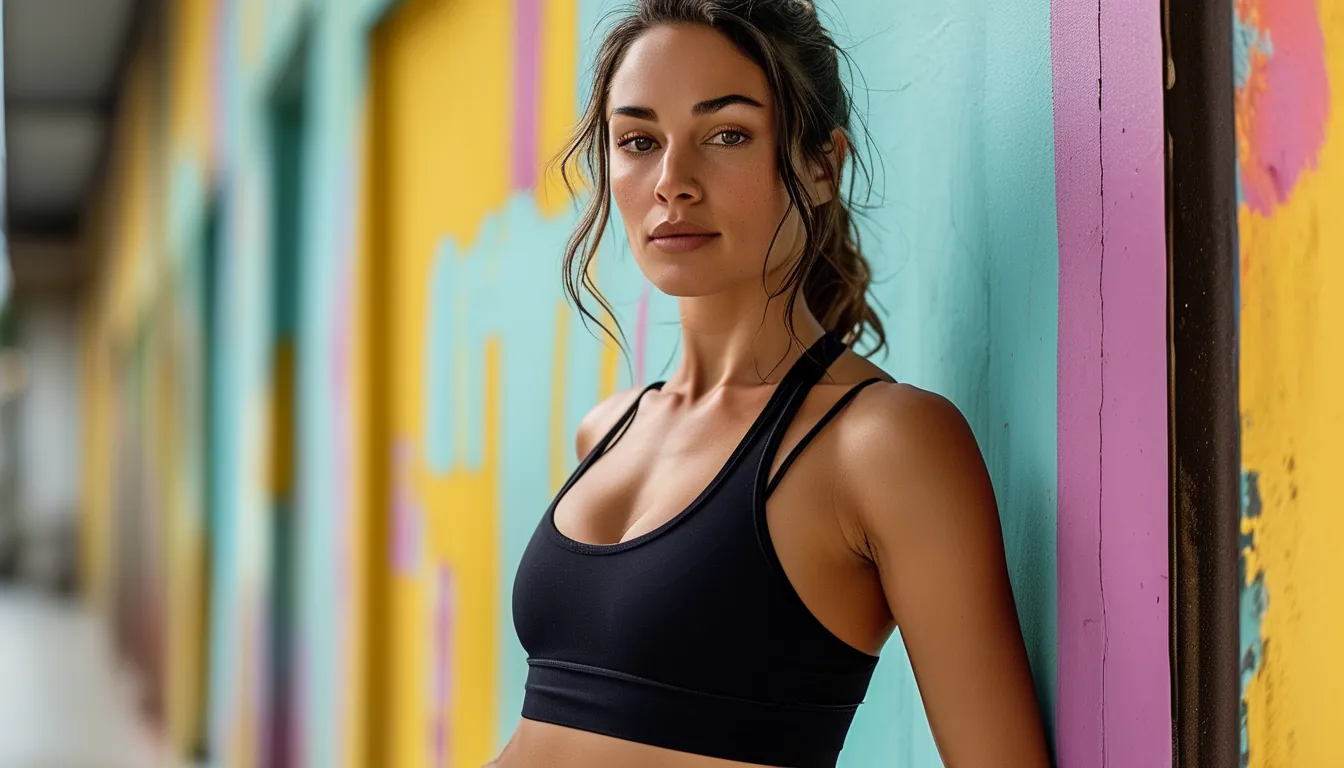
Seen here: High Waist Yoga Leggings with Side Pockets — shop it on bubblelime.com
Keep Reading
This article is for general informational and styling purposes only. Fit, sizing, and product availability may vary.